Journal · Gear Review
Installed December 2025 — the system that turns fresh water from a rationed resource into a non-issue on extended, self-sufficient passages.
Water is one of the hard limits on how long a boat can genuinely stay out and self-sufficient — tankage is finite, and once it's gone, the only options are cutting a passage short or finding somewhere to fill up. A watermaker turns seawater into fresh water underway or at anchor, removing that limit entirely, which matters enormously for the longer ARC+ and Caribbean legs where the next marina might be a week or more away.
What's Fitted
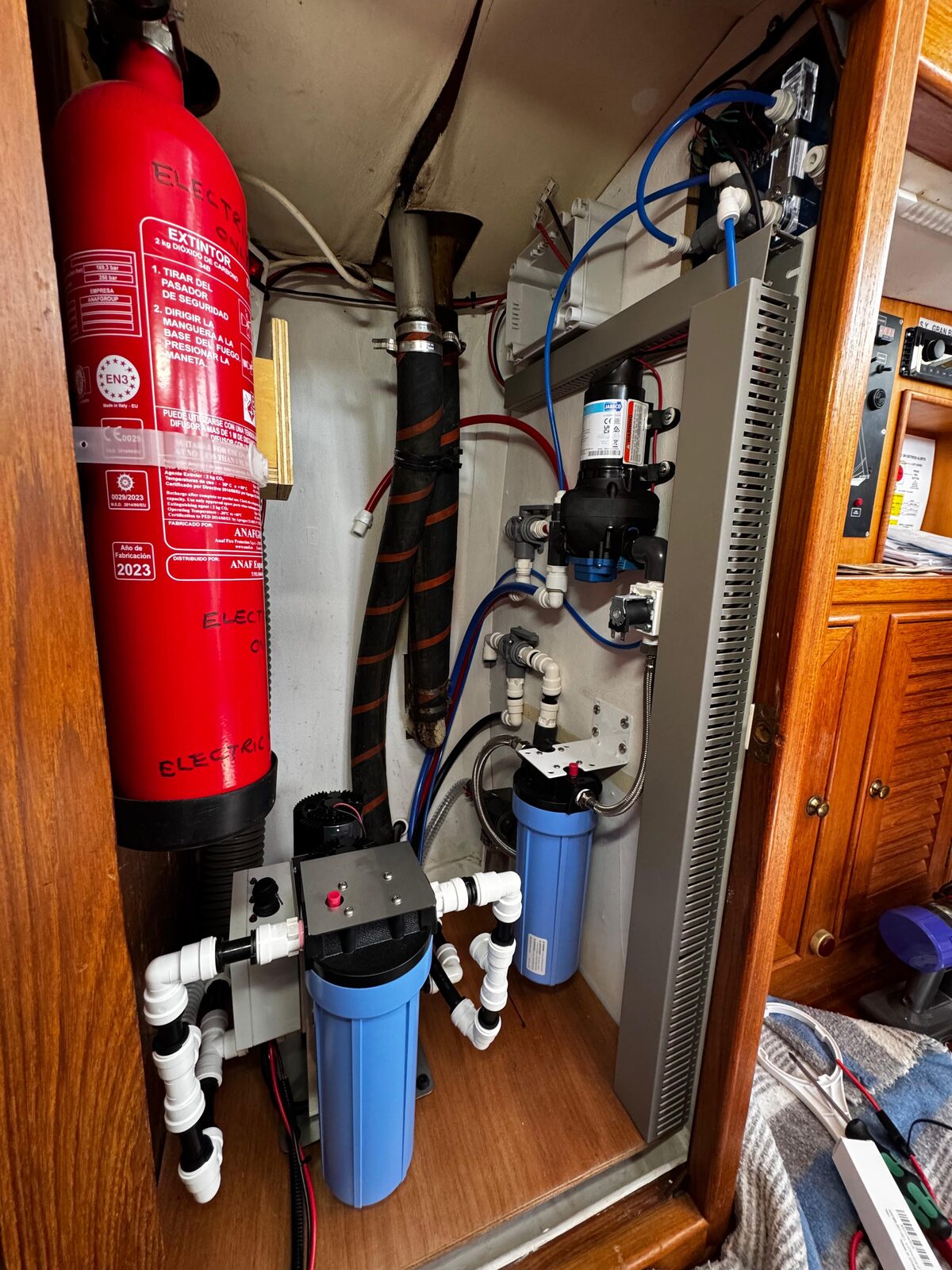
The complete system installed in its locker, with the pre-filter and product water filter housings alongside.
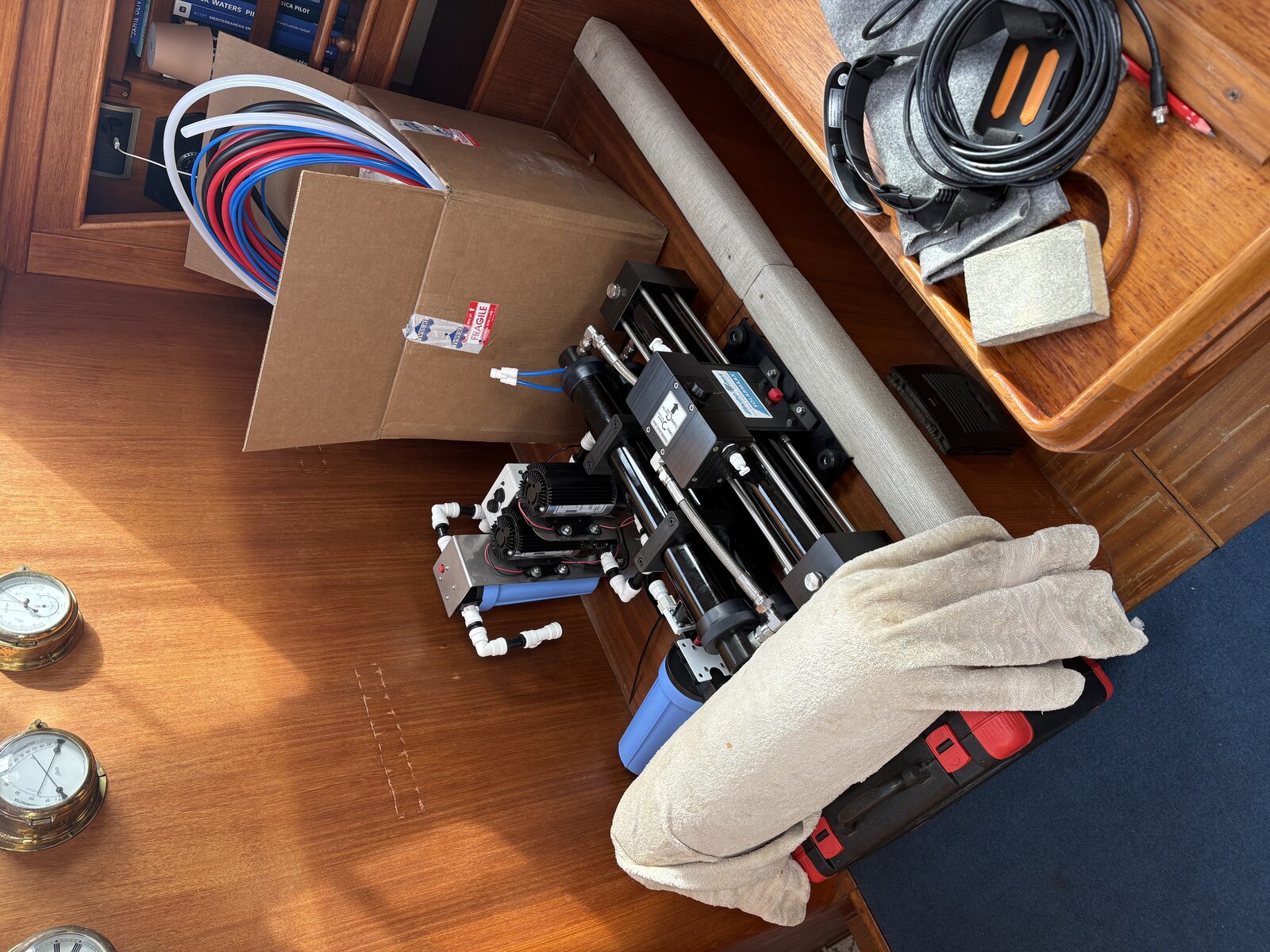
A SolarMaax 340 reverse osmosis watermaker, built by ElectroMaax and designed specifically for low-energy, DC-powered use rather than adapted from a mains-powered system. Rated production is 7–14 gallons (26–53 litres) per hour, and on the boat's 24V system it draws just 4–10 amps — a genuinely modest load against the 20.16kWh lithium bank and 800W solar array already aboard.
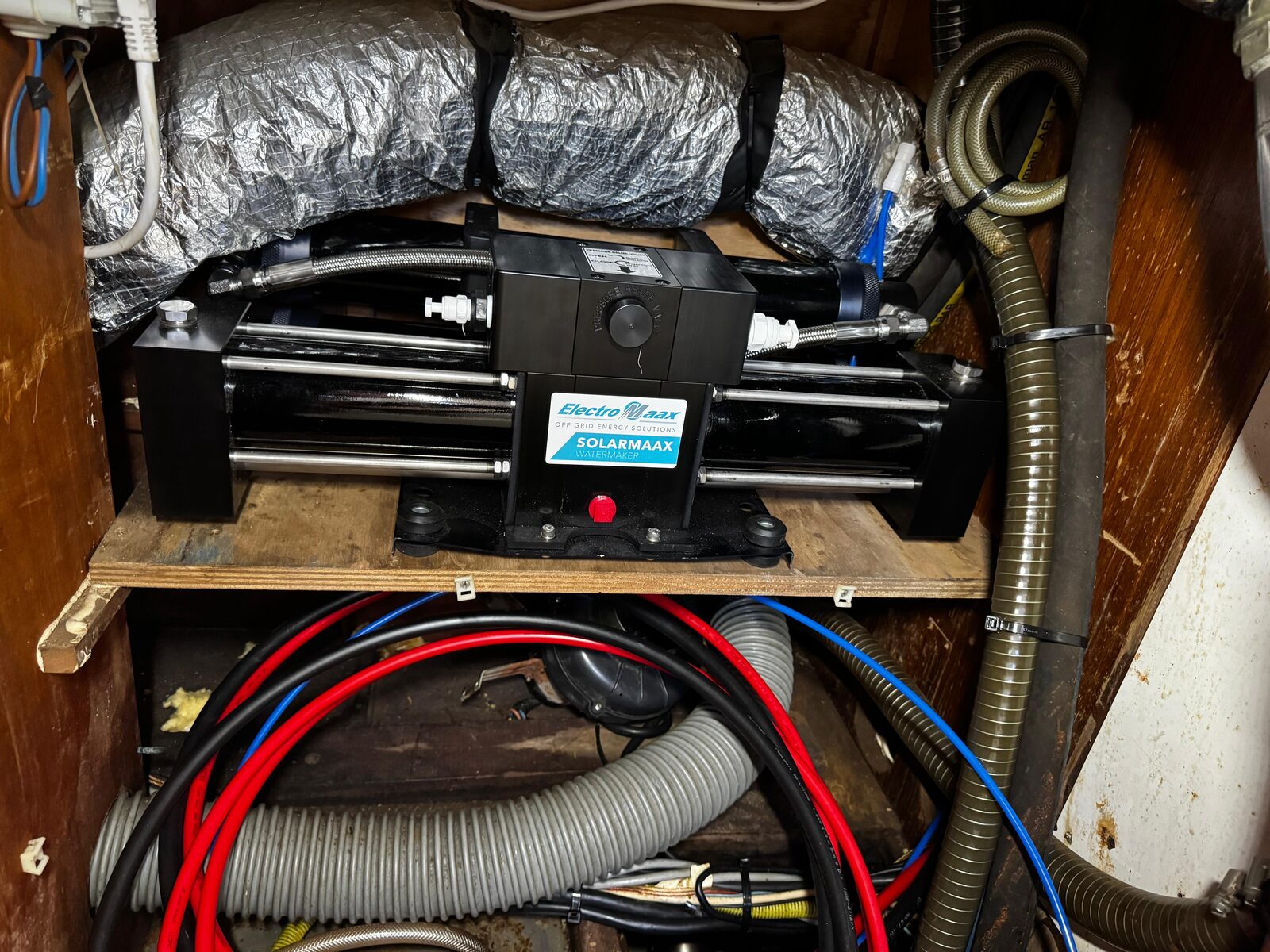
The system uses an Enhanced Clark Pump — a purely hydraulic energy-recovery device with no electrical components of its own — to intensify the feed pump's pressure enough for reverse osmosis to occur, which is what keeps the power draw so low. Water passes through a polyamide thin-film composite membrane rated to a 99.4% salt rejection rate, with an automatic freshwater flush fitted to rinse the membrane after each use and extend its working life.
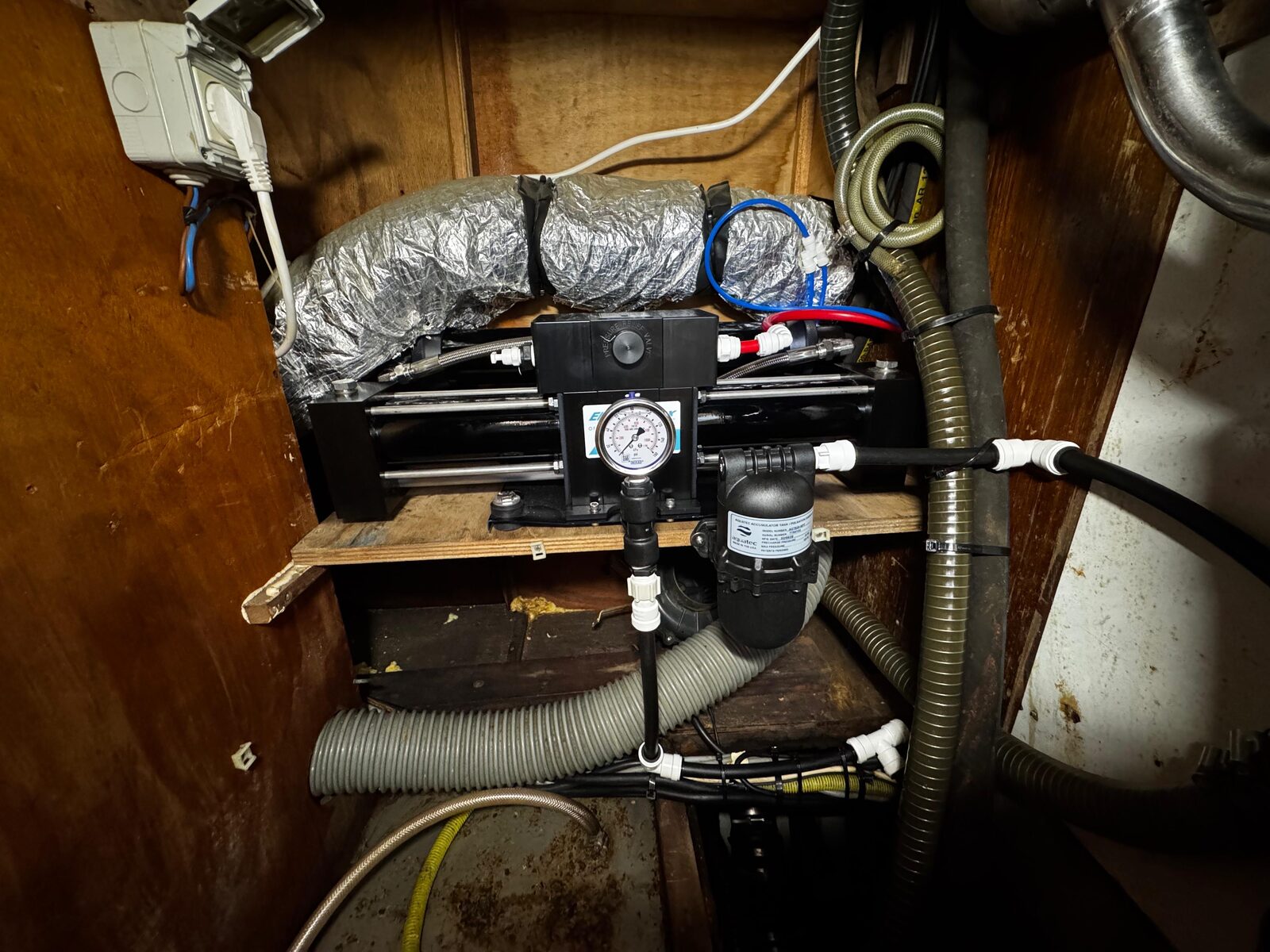
A dedicated pressure gauge and an Aquatec accumulator tank sit just downstream of the unit, smoothing out delivery pressure to the taps rather than leaving the system to pulse with every stroke of the feed pumps.
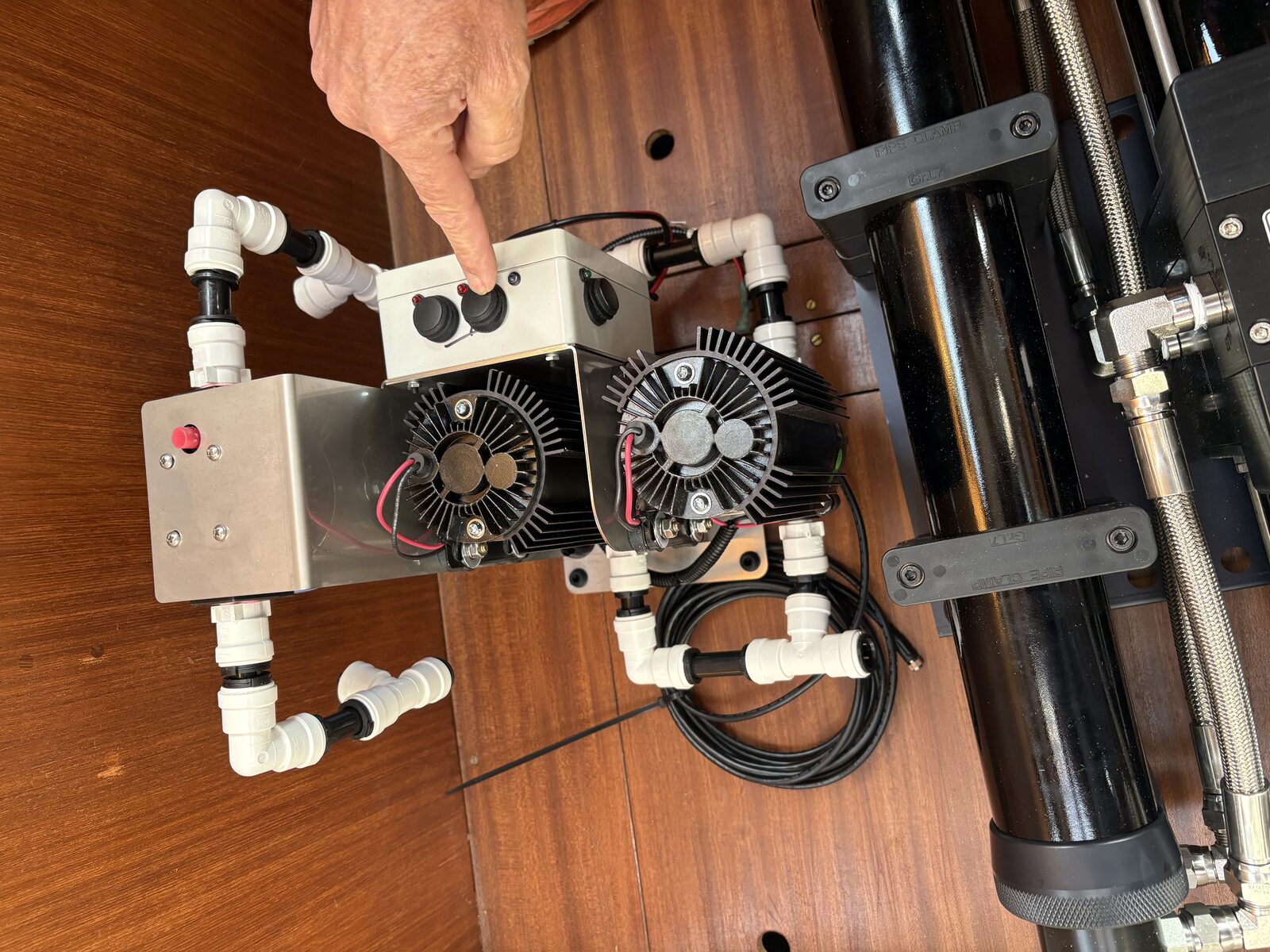
A simple two-button control panel with its own indicator lights runs the twin permanent-magnet feed pumps — deliberately straightforward for anyone aboard to operate, rather than needing a manual to hand every time the tanks need topping up.
Why It Matters
Without a watermaker, tank capacity effectively sets the length of a passage or the size of the crew you can carry comfortably — whichever runs out first. With one, the boat can make its own fresh water from the sea it's floating on, for as long as there's power to run it, and the low-energy design here means that's rarely a constraint. That changes the calculation for longer legs entirely: the ARC+ crossing and the winter Caribbean season both depend on exactly this kind of self-sufficiency, rather than planning every passage around the next place to refill tanks.
Worth noting for guests: the system is designed and tested for typical seawater use specifically — it isn't something to run in harbour water, oily water, or fresh water without proper sterilisation first, and the membrane itself is a genuinely delicate, expensive component that a fair few careless operating habits can quietly ruin.
Installation Notes
Installed in December 2025, in good time for the 2026 season, by Marc at Enàutica — the same trusted electrician behind the TITAN lithium bank and Mastervolt charging system. Keeping the watermaker's DC installation with the same person who wired the rest of the boat's power system means the whole electrical side of the boat, not just the individual units, is specified and wired by someone who already knows exactly what the battery bank and charging sources can support.
The whole system was built up as a single skid-mounted unit before it went in — twin feed pumps, the Clark Pump and pressure vessel, and a compact two-button control panel with its own indicator lights, all pre-plumbed on one stainless frame and tucked into a dedicated locker rather than scattered around the boat. The spare tubing and fittings came bundled and colour-coded in the box, which made routing feed, product and brine lines to the right place straightforward rather than guesswork.
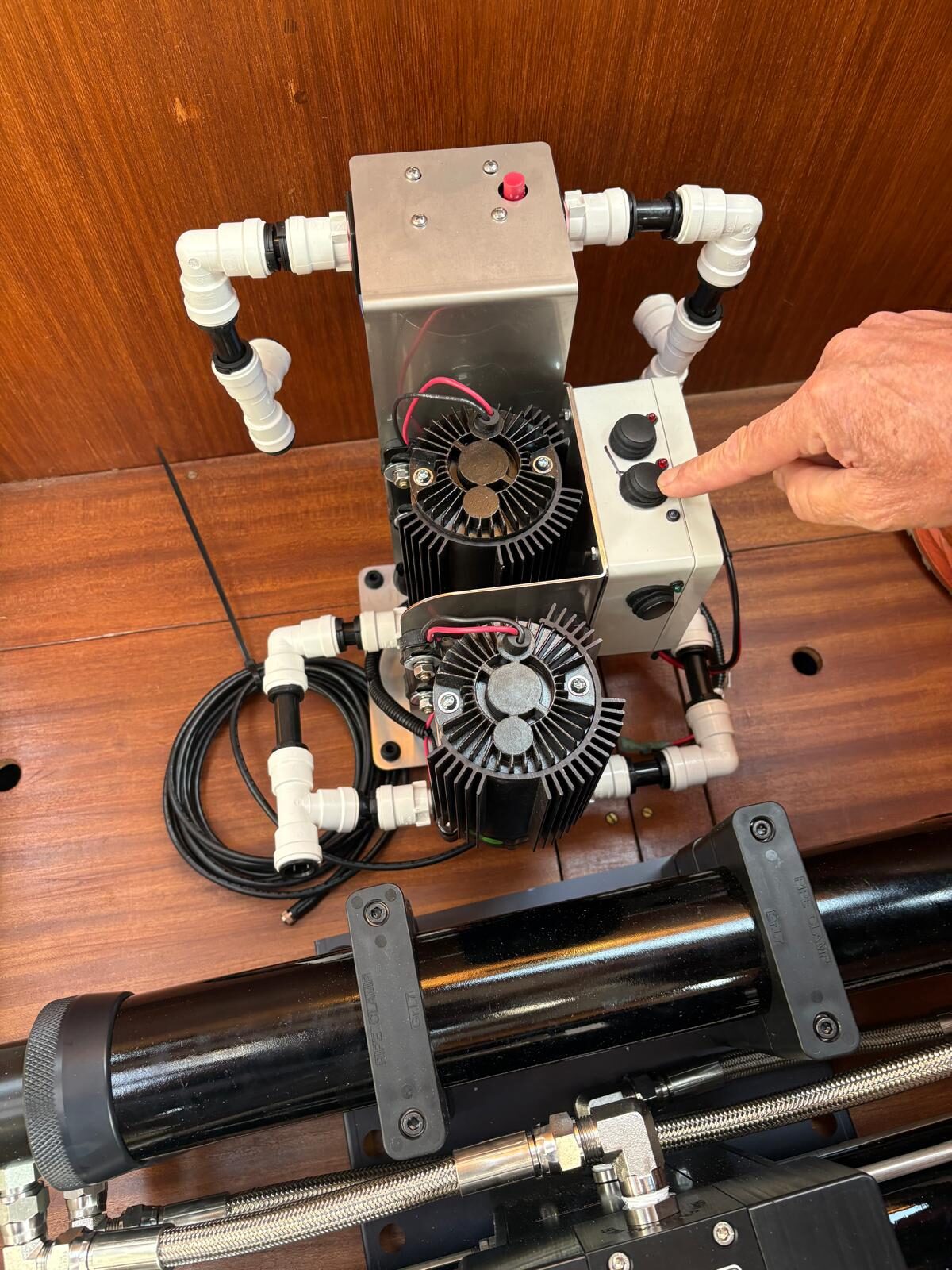
The twin feed pumps and control panel, installed in their dedicated cupboard.
The through-hull sits above the waterline, and the plumbing run was made noticeably easier by the system's location on the port side — a genuinely convenient spot rather than one that fights the rest of the boat's layout. A new Marco UP6/E 12/24V electronic gear pump was fitted into the fresh water system at the same time, giving constant pressure at the taps and shower even as demand increases with more people drawing water at once, rather than the pressure dropping off under load the way a simpler pump can.
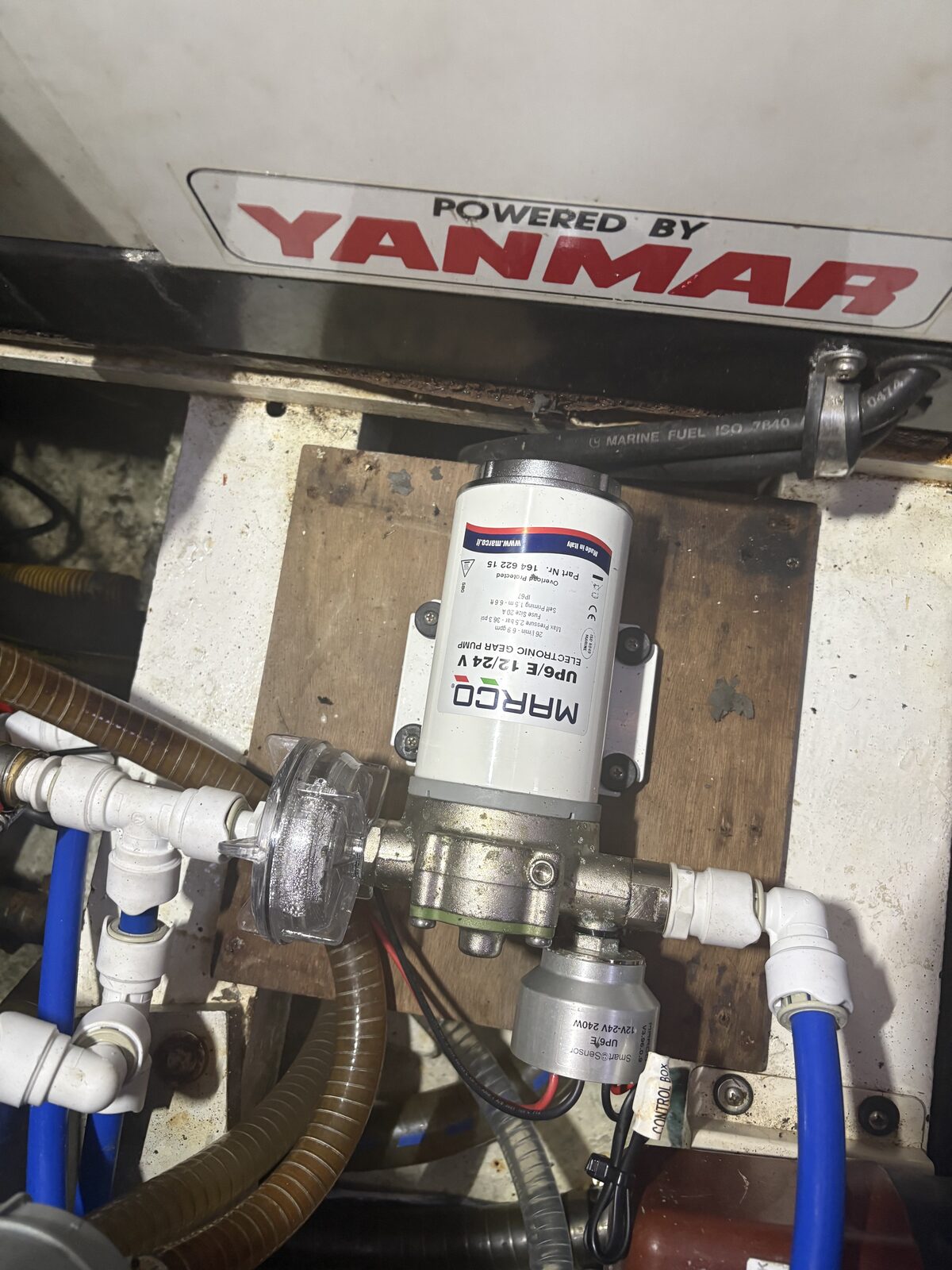
The Marco UP6/E pump, giving constant water pressure regardless of demand.
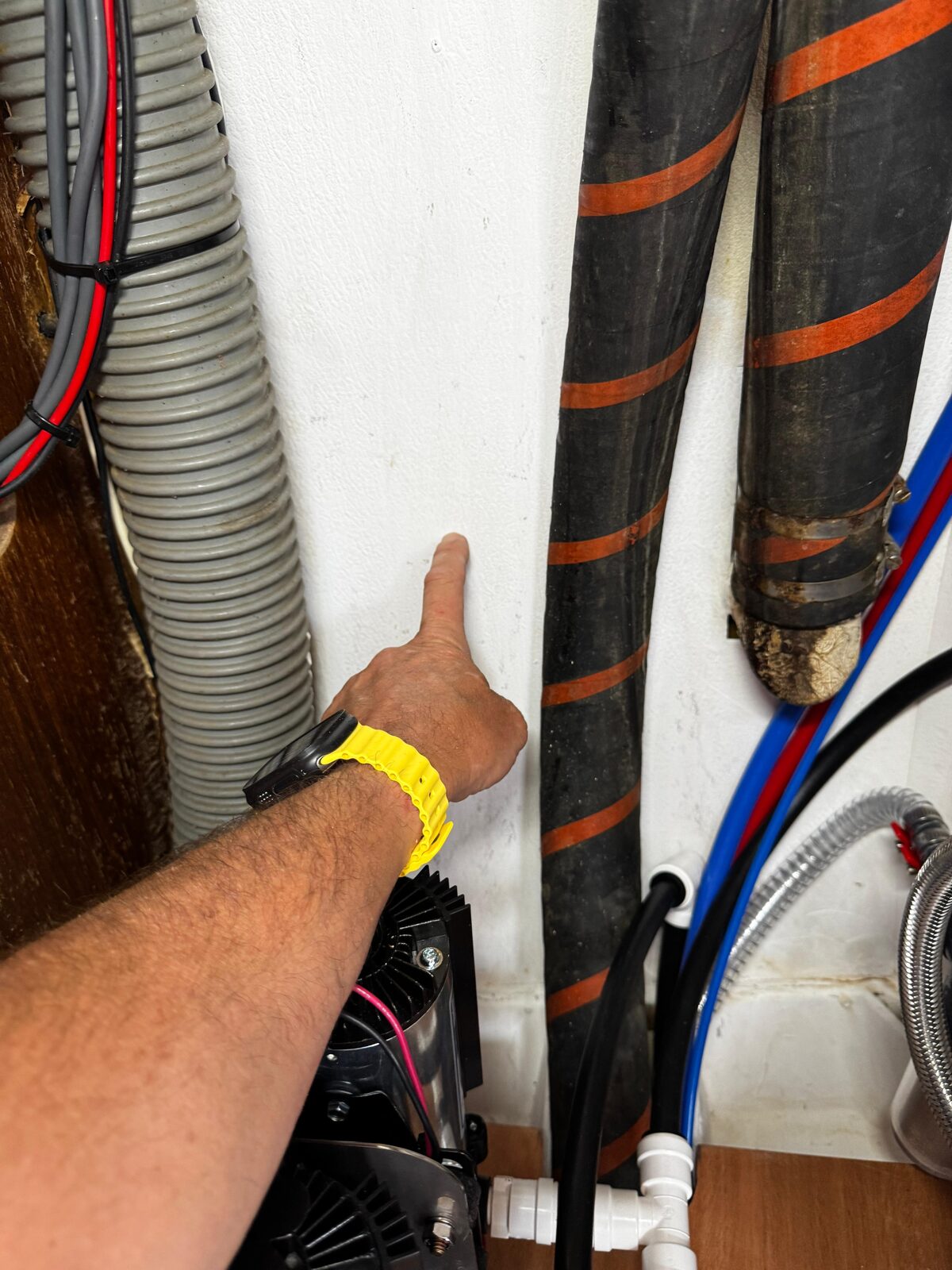
The through-hull position, above the waterline on the port side.
Living With It
We sailed extensively through 2026 to the Balearic Islands and Sardinia, often with four or five crew aboard, and the watermaker changed the trip completely: we never once topped up at a marina, and never went without a daily shower, even with that many people aboard drawing water every day. It's genuinely one of the best upgrades made to Gran Blau — the kind of change that doesn't show up on a spec sheet but reshapes how a season is actually run, freeing up route planning from chasing the next tap and letting the crew live properly rather than rationing.
More From the Refit
This is one of nine systems covered in the refit overview — see the rest, or sign up to the newsletter for each new review as it's published.
Read the Refit Overview Sign Up to the Newsletter