Journal · Gear Review
A new Corian worktop and a gimballed induction hob — the change that took gas off the boat entirely.
Gas has always been one of the classic causes of a serious boat fire or explosion — a leak collecting, unseen, in the bilge of a boat that isn't well ventilated is a genuinely dangerous scenario, and it's one that simply can't happen if there's no gas aboard to leak in the first place. Removing gas entirely and replacing the old gas hob with a gimballed induction hob, run from the boat's 3kW inverter, was one of the more significant single decisions in the whole refit — and it meant the galley worktop itself needed rebuilding around it.
What's Fitted
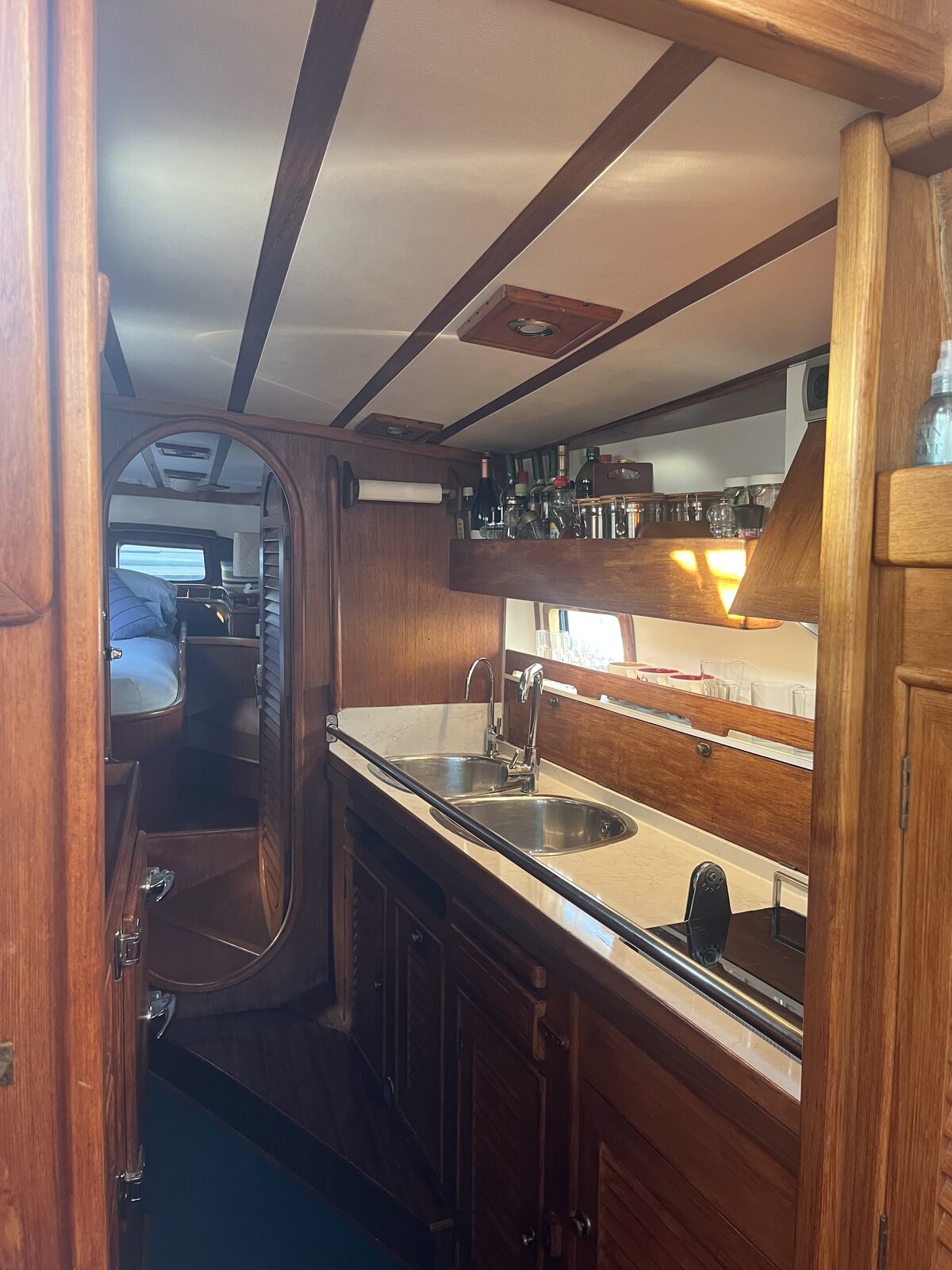
A new solid-surface Corian worktop, fabricated and fitted around the new hob and sinks — chosen for a durable, easy-to-clean galley surface that stands up to life at sea far better than a laminate or timber top.
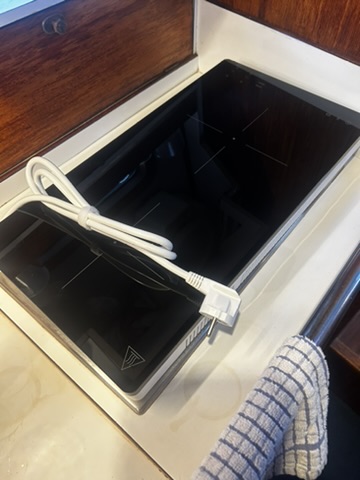
Gimballed means it stays level as the boat heels, so pans don't slide or spill under sail — a proper cruising hob rather than a domestic one bolted in.
Why It Matters
An induction hob only draws power when there's a pan on it, and there's no flame, no gas locker, no gas detector to maintain, and no risk of a slow leak building up somewhere it can't be seen. Paired with the lithium battery bank and 3kW inverter, the boat has plenty of power to run it properly, including at anchor without the engine running. It's a genuine safety upgrade dressed up as a convenience one.
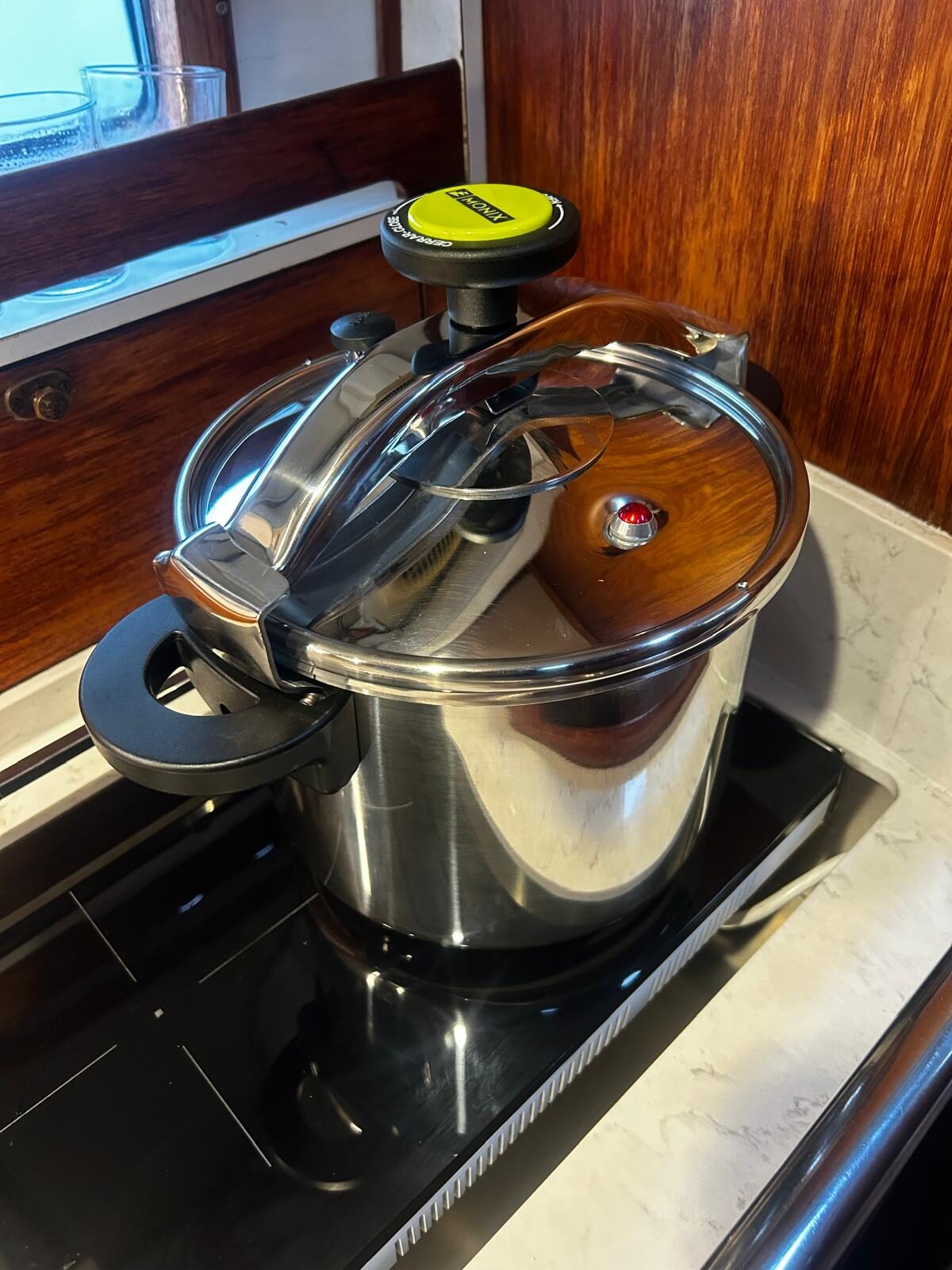
A pressure cooker in everyday use on the induction hob — a pairing that suits the induction hob's steady, controllable heat well.
Fridge & Freezer
In 2026, we also fitted new compressors and refrigeration systems to both the fridge and freezer — a less visible upgrade than the worktop and hob, but one that's paid off every single day since. The new units are noticeably more energy-efficient, drawing less from the battery bank to hold the same temperature, and run far more quietly than the compressors they replaced, which makes a real difference living aboard at anchor or on watch overnight.
The Rebuild
Fitting the new hob meant the galley worktop had to come out and be rebuilt around it, rather than just dropping new equipment into the old surface. The process, in photos:
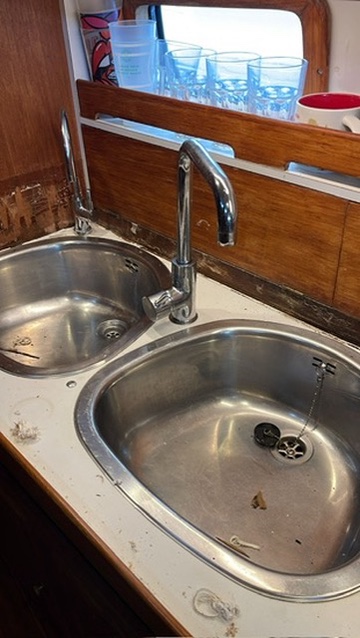
The old double stainless sink and worktop, before any work began.
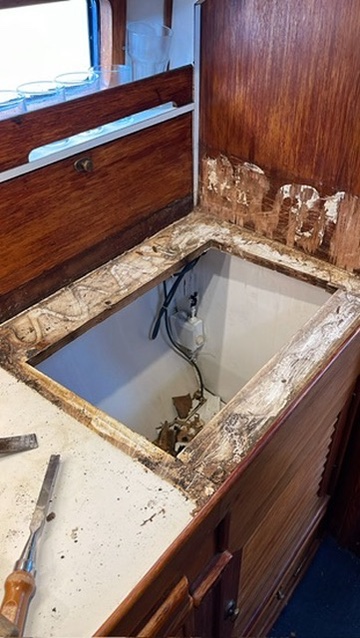
The old surface cut back to see exactly what was underneath before deciding how to rebuild it.
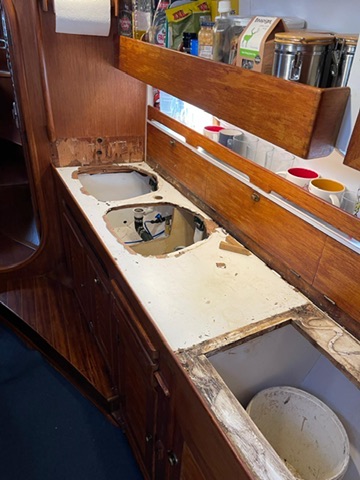
The full worktop stripped back to bare timber and old plumbing, ready for the new layout.
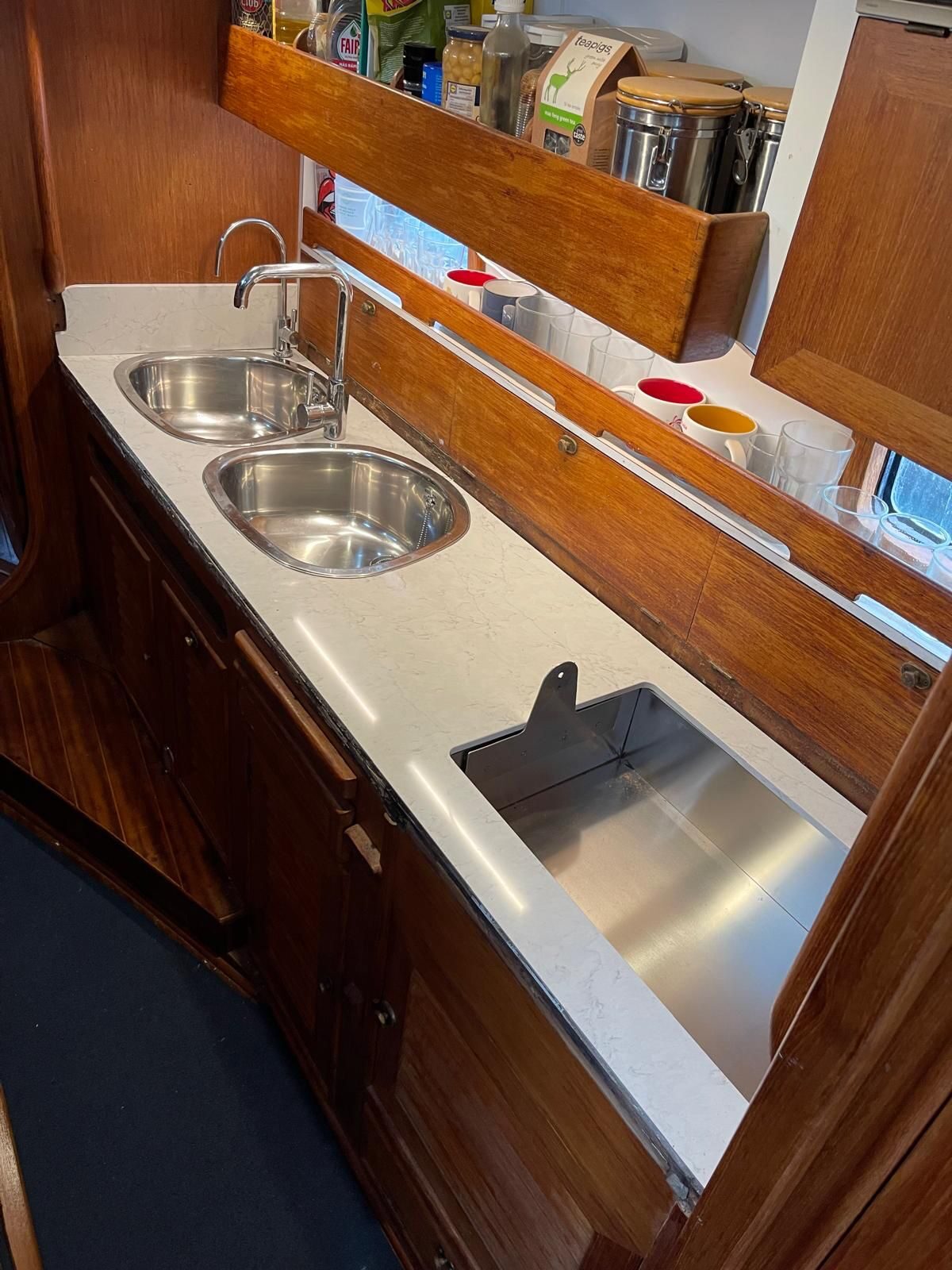
The new Corian worktop and sinks fully fitted, with the cutout ready and waiting — the gimballed hob itself went in as a separate, final step once the surface around it was finished.
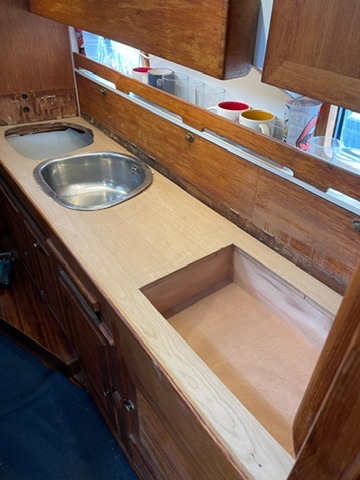
After: the new worktop, sink refitted and cutout ready for the gimballed hob.
Installation Notes
This was very much a two-trade job, and it needed both to get it right. Isidro, at IV Carpintería Náutica, handled the joinery — stripping the old worktop and sink back to bare timber and rebuilding it around the new Corian surface and hob cutout. The gimbal itself, the part that lets the hob stay level as the boat heels, was a bespoke build by Jaume, our metalworker, who's also behind the boarding ladder elsewhere on this site. Isidro is another of the small handful of tradespeople trusted implicitly with this boat — he does all our joinery work, and like Marc and Nacho, that trust has been earned over repeated jobs, not assumed on the first one. Between good joinery and a properly engineered gimbal, the result is a galley that looks built-in from the yard, not retrofitted.
The rebuild ran alongside the TITAN lithium upgrade in early 2025, and between stripping the old worktop back to bare timber and fitting the new Corian surface, hob and gimbal, it took the best part of two months to complete — not a quick swap, but a proper rebuild done once and done properly.
Living With It
This has been one of the most remarkable transformations of the whole refit. Cooking at sea is now genuinely easy, in a way it simply wasn't before: the gimballed hob stays level as Gran Blau heels, so a pan of something hot stays exactly where it's put rather than sliding across the worktop or, worse, off it. Combined with no gas aboard to worry about, the whole business of cooking underway feels safe and secure rather than something to brace for — a proper meal on passage, not just something to get through.
More From the Refit
This is one of nine systems covered in the refit overview — see the rest, or sign up to the newsletter for each new review as it's published.
Read the Refit Overview Sign Up to the Newsletter