Journal · Gear Review
A full Raymarine instrument suite at the helm — wind, speed and heading at a glance, backed by an autopilot control head that puts the whole system a single button-press away.
Good instruments don't win passages on their own, but bad ones — or missing ones — can lose them. Gran Blau's cockpit console carries a dedicated Raymarine display for each of the key numbers a helmsman or watchkeeper actually needs: apparent wind, speed through the water, heading, and autopilot control, each on its own screen rather than buried in a menu on a single shared display.
What's Fitted
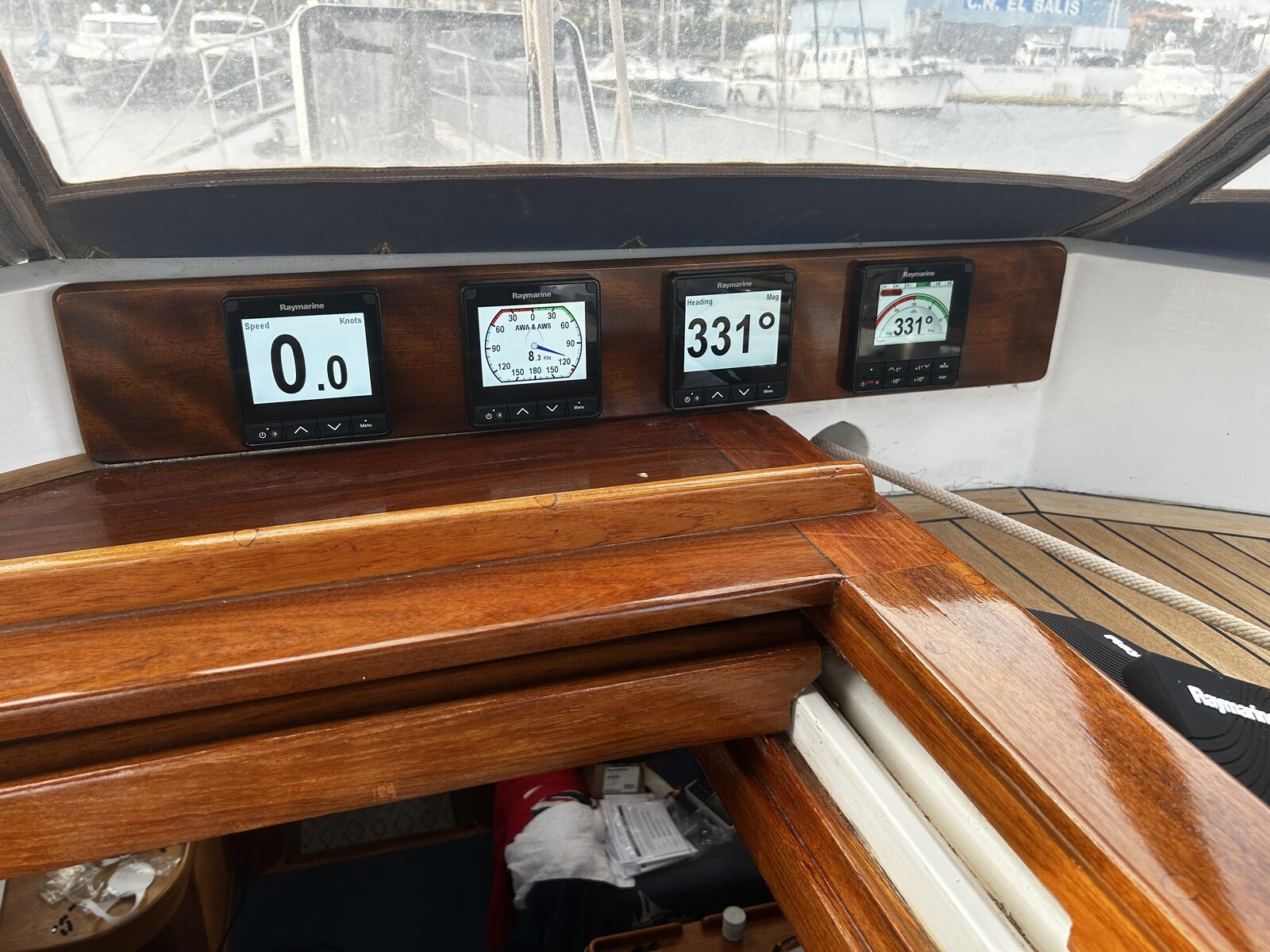
Speed, apparent wind angle & speed, heading, and autopilot control, each on its own dedicated Raymarine display.
Three dedicated instrument displays cover speed through the water, apparent wind angle and speed on a single dial, and magnetic heading — each legible at a glance from the helm, without cycling through pages on a shared display to find the number that matters right now.
A dedicated autopilot control unit sits alongside the instruments, showing standby/auto status and heading directly, with simple +/-1° course adjustment buttons — full control of the autopilot from the same console, without needing to go below to the chart table.
Why It Matters
Offshore, at night, tired, is exactly when instruments earn their keep — and exactly when a cluttered multi-function display asking you to page through menus is the last thing you want. Separate dedicated displays for speed, wind and heading mean a watchkeeper can read the one number they need without touching a button, and the autopilot control head means course changes, standby and auto engagement are all handled from the same spot at the helm, day or night.
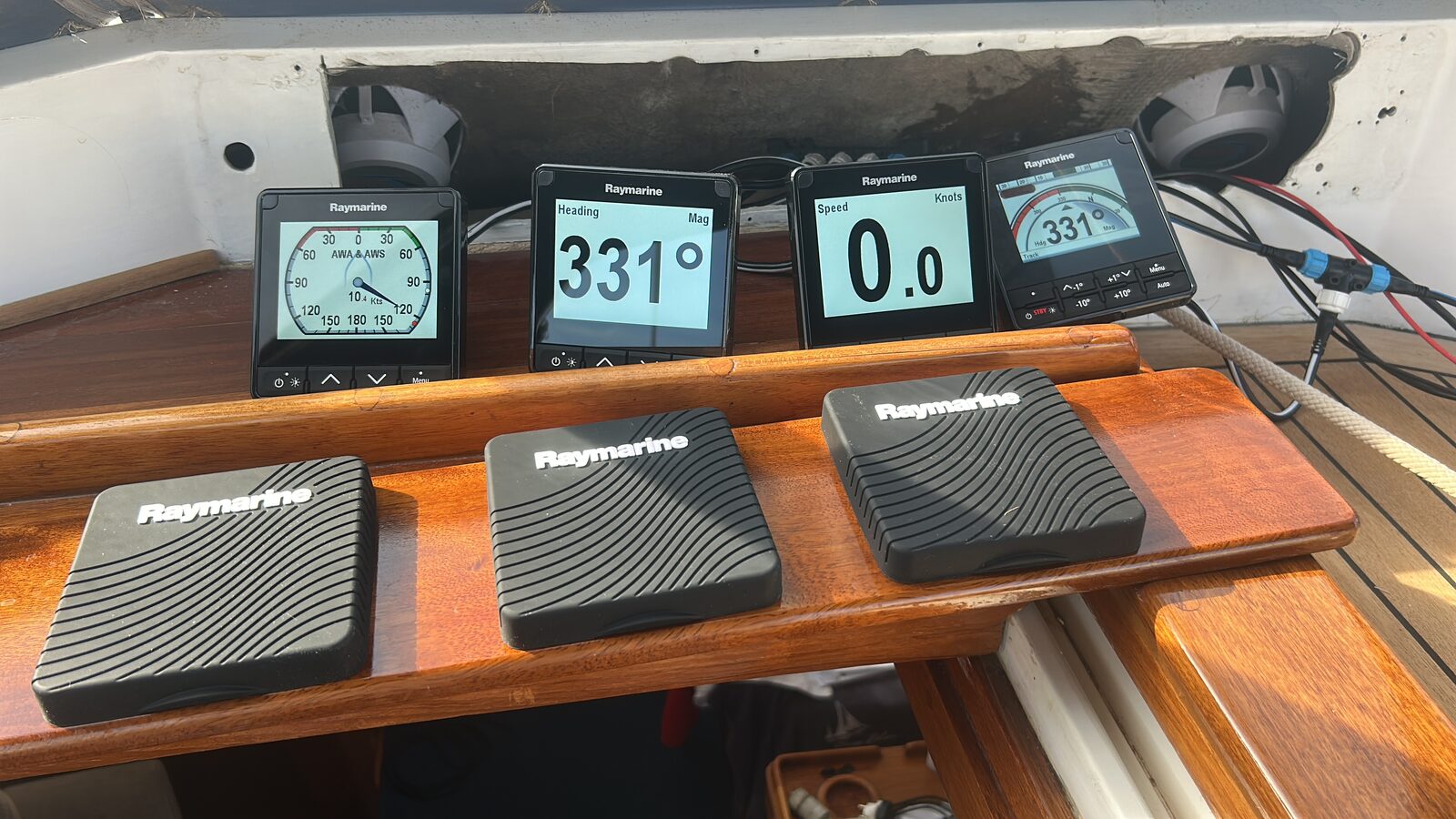
The same console from the helm seat — every key number in one sightline.
Radar, AIS & Night Passages
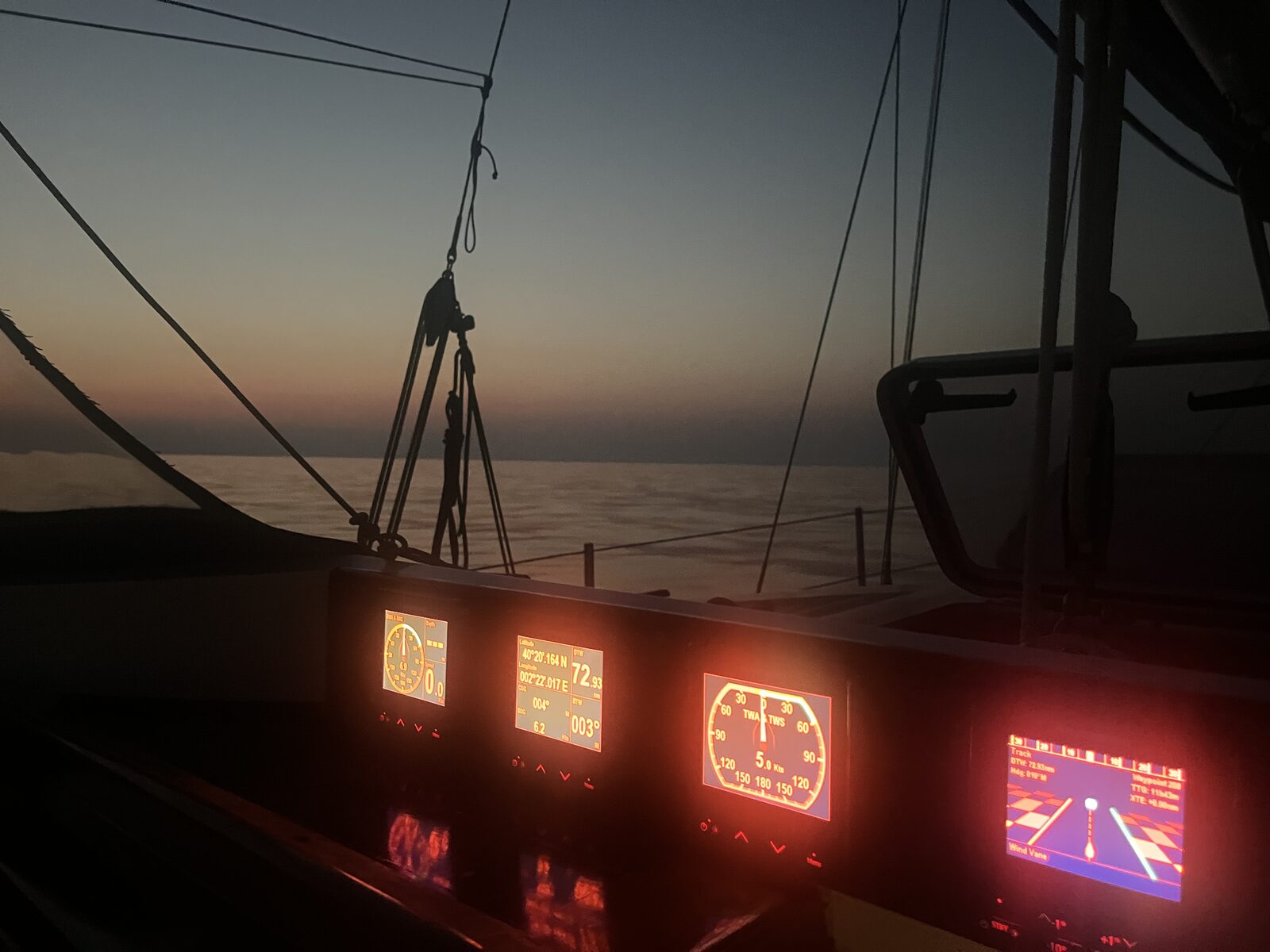
The instruments earn their keep most on an overnight passage, switched to red night-vision mode so a watchkeeper's eyes stay adjusted to the dark — heading, position, wind and depth all still there at a glance, without a single white screen to ruin night vision.
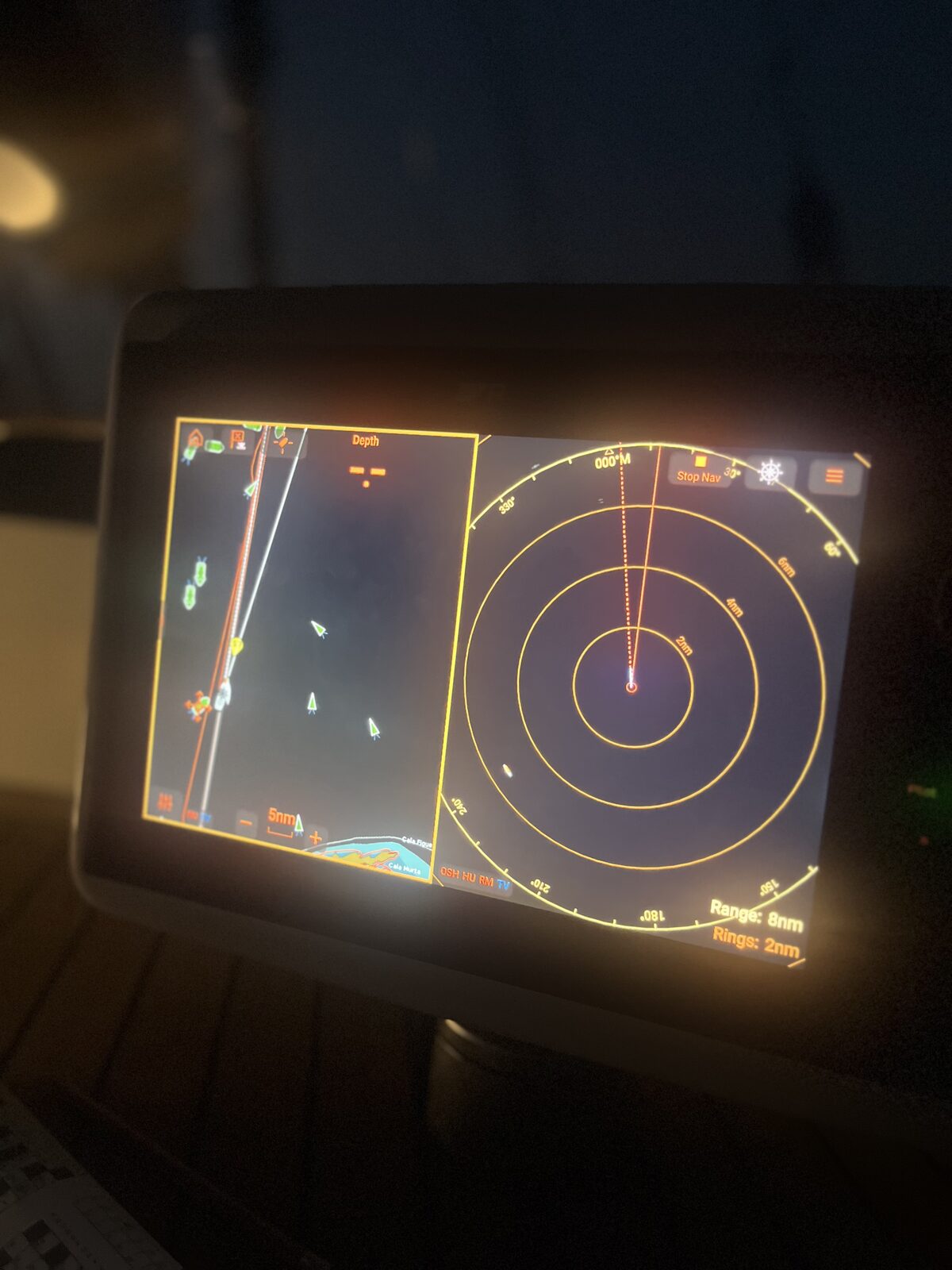
The chartplotter/MFD at the nav station runs a Raymarine Doppler radar and AIS side by side with the chart — each AIS target's course and speed tracked automatically, and the Doppler radar giving an independent read on a target's closing speed as well as its position, regardless of whether a vessel is transmitting AIS at all. A dedicated Raymarine VHF radio rounds out the system, so calling a ship seen on radar or AIS is a single reach, not a search through drawers for a handset. Together, instruments, radar, AIS and VHF are the difference between a guess and a genuine plot when converging with shipping traffic in the dark.
Installation Notes
Each display carries its own Raymarine protective cover, fitted whenever the boat is left unattended or laid up — a simple habit that keeps four exposed screens at the helm from taking the full brunt of Mediterranean sun and salt spray between passages.
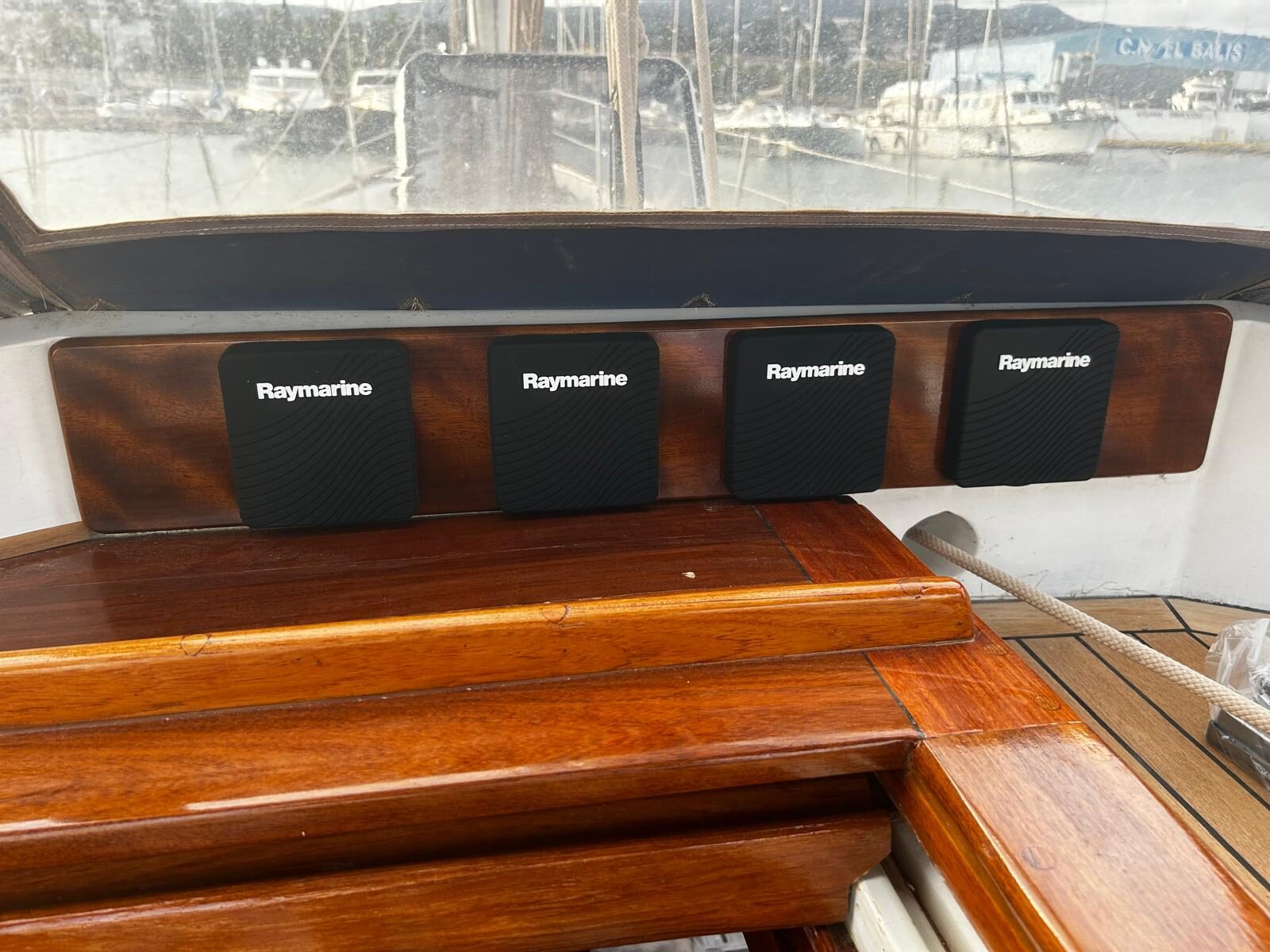
Covers on: the whole console protected between passages.
The whole navigation suite — instruments, autopilot control head, chartplotter/MFD, Doppler radar, AIS and VHF — was fitted at the same time as the TITAN lithium upgrade, by Marc at Enàutica. Doing both jobs together made sense: a new power system and a new navigation system share a lot of the same wiring runs and power budget, so specifying and fitting them as one project meant everything talks to everything else properly, rather than two systems bolted on at different times and never quite integrated.
Living With It
This has been a genuine game changer, especially at night in crowded shipping lanes. Together, the new Raymarine VHF, AIS and Doppler radar system take what used to be a stressful, squinting exercise — trying to work out whether a light on the horizon is closing, crossing, or nothing to worry about — and turn it into a straightforward plot: course, speed and closing rate, right there on the display, well before it would ever be a genuine concern. Instruments, autopilot control and situational awareness all working together properly is exactly what makes an overnight passage through busy water feel like routine rather than an ordeal.
More From the Refit
This is one of the systems covered on the Boat & Safety page — see the rest of the navigation fit-out and safety inventory.
See Boat & Safety Sign Up to the Newsletter